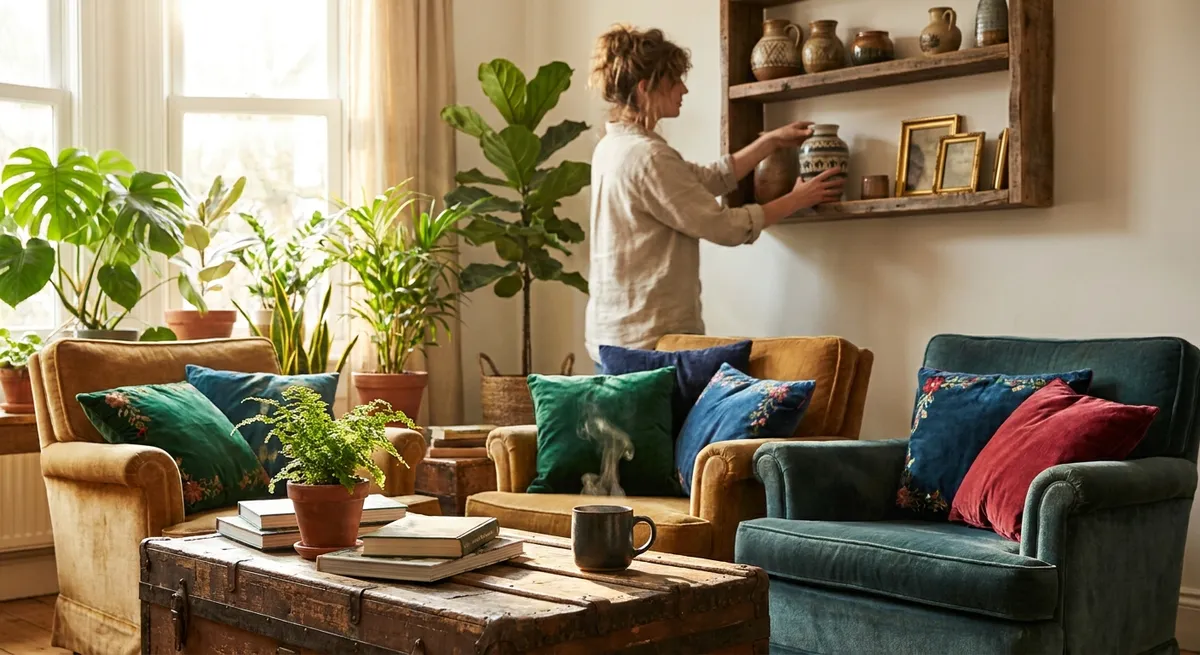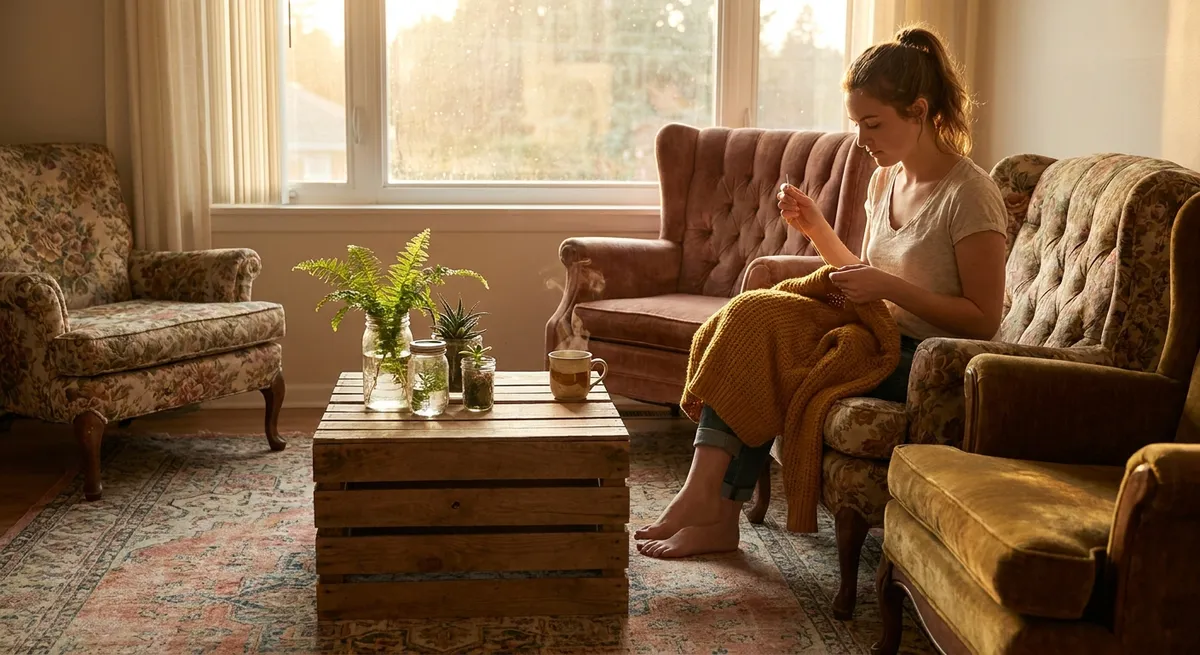
There’s a quiet kind of joy in finding the perfect mug for 99 cents, a $150 blazer for $12, or the exact casserole dish your grandma used—still sturdy, still beautiful. Thrifting isn’t just about saving money; it’s about crafting a life that feels rich in meaning, not receipts. At Centwise Nook, we’re all about that cozy, resourceful sweet spot: living well on less, without turning your days into a full-time scavenger hunt.
This guide will walk you through realistic, time-respecting ways to save, with specific price comparisons, clever substitutions, and seasonal timing tips that help your budget stretch without your life feeling stretched.
Start With a Plan, Not a Pile
Impulse thrifting can leave you with a crowded closet and an empty wallet. A 20-minute plan before you shop can easily save $20–$50 per trip.
Make a focused “Thrift List”
Think of it like a grocery list, but for secondhand:
- 2–3 wardrobe gaps (e.g., “black work pants,” “warm cardigan,” “rain boots”)
- 2–3 home needs (e.g., “mixing bowls,” “picture frames,” “bookshelf”)
- 1–2 “nice if found cheap” items (e.g., “cast-iron skillet,” “camping gear”)
Instead of browsing everything, you laser-focus. If you usually spend $40 on random finds, trimming that down to $20–$25 of intentional buys is an easy $15–$20 saved per visit.
Know your “full price” ceiling
Before you go:
- Look up new prices for your list items (at Target, Walmart, or Amazon).
- In your notes app, jot down:
- “New: $35 | I’ll pay up to: $10” for jeans
- “New: $90 | I’ll pay up to: $25” for a coat
This stops “bargain blindness.” A $20 thrifted sweater isn’t a deal if similar new ones go on sale for $25. A good rule: aim to pay 25–40% of new price for most items, and up to 50–60% only for high-quality brands or special pieces (like leather boots or wool coats).
Smart Price Comparisons: What’s Actually Worth Thrifting?
Some things are almost always cheaper and better secondhand; other things are barely a deal once you factor in time, gas, and quality.
Clothing & Shoes
Often excellent to thrift:
- Blazers & workwear
- New: $60–$180 at mid-range stores
- Thrift: $6–$18 for brands like J.Crew, Banana Republic, Ann Taylor
- Savings: $50+ on a single piece
- Jeans
- New: $40–$90
- Thrift: $5–$12 (often Levi’s, Gap, Old Navy, American Eagle)
- Savings: $30–$60
- Kids’ clothes (they outgrow everything so fast)
- New: $8–$20 per item
- Thrift: $1–$4 per item
- Outfit of 4 items: new ~$50, thrift ~$10–$12
- Special occasion wear (suits, dresses)
- New: $80–$250
- Thrift: $10–$30
- Savings: $70–$200 on something you might wear once or twice
Usually skip or be picky:
- Fast fashion basics (thin T-shirts, leggings, flimsy tops)
These often look worn after a few washes. If a new, higher-quality basic at discount is $8–$12, a stretched $5 thrift tee isn’t a win.
- Athletic shoes
If heavily worn or misshapen, they can hurt your feet. Only consider if very lightly used and a quality brand.
Home & Kitchen
Best-value thrift categories:
- Kitchenware
- Glass baking dish:
- New: $15–$25
- Thrift: $2–$4
- Cast iron skillet:
- New: $25–$60
- Thrift: $5–$15 (and cast iron lasts for decades)
- Mixing bowls, utensils, mugs: often $0.50–$2 each
- Frames & décor
- New frames: $10–$30 each
- Thrift: $1–$5 each
You can repaint frames or swap in your own art or photos.
- Books & board games
- Hardcover books:
- New: $20–$30
- Thrift: $1–$4
- Board games:
- New: $20–$50
- Thrift: $3–$8 (check for missing pieces)
Be cautious with:
- Small appliances (coffee makers, blenders)
Test in-store if possible. If it’s $12 used vs. $25 new with a warranty, consider new—especially for something you’ll use daily.
- Nonstick pans
Scratches can be a health concern and shorten lifespan. Look for stainless steel, cast iron, or glass instead.
Clever Thrift Hacks & Substitutions That Stretch Your Budget
Resourcefulness shines when you can see “what else could this be?” Here are time-saving and money-saving ideas that don’t require DIY wizardry.
1. The “Upgrade, Don’t Duplicate” Rule
Before you buy:
- Decide what the new item will replace at home.
- If you bring home a nicer version, donate or sell the old one.
Example:
You find a $10 heavy-duty stainless steel pot to replace your flimsy $25 new one from years ago. Instead of keeping both, you sell your old pot for $5 on Facebook Marketplace. Net cost of your “upgrade”? $5.
2. Shop Men’s & Kids’ Sections for Hidden Deals
- Men’s section for:
- Oversized cotton button-ups (great as light jackets or layering pieces)
- Plain sweatshirts and hoodies with better quality fabric
A similar women’s “boyfriend fit” shirt might be $40 new; a men’s shirt at the thrift store is often $4–$7.
- Kids’ section for:
- Teens and petite adults: look for XL youth sizes.
Example: basic hoodies that are $30–$40 new often go for $3–$6 secondhand.
3. Spray Paint & Fabric Magic
- A $3 can of matte black or brass spray paint can transform:
- $2 gold-trimmed frame → looks like a $25 modern frame
- $4 mismatched candle holders → coordinated “set” you’d pay $30+ for new
- A $5–$10 thrifted flat sheet can become:
- Curtains (clip rings + rod)
- Tablecloth or picnic blanket
- Fabric for cushion covers
New curtains can run $30–$80 per window; sheet + clips + rod often totals $20 or less, and you can customize the length.
4. Seasonal “Swap” Bins
Keep small, labeled bins in a closet:
- “Gift Closet” bin
- Books, pretty mugs, frames, puzzle sets, kids’ toys (still boxed or very gently used)
Fill it with new or like-new thrift finds:
If you can pick up 5–6 gifts at $3–$5 each across the year, you can cut your December gift spending by $50–$100 easily.
- “Future Size / Future Season” bin for kids
When you see good shoes or jackets a size or two up for $2–$6, grab them.
New kids’ coats: $30–$60
Thrift: $5–$10
Just don’t overbuy—1–2 items per size is plenty.
Seasonal Timing: When to Thrift What
If you time it right, you get better selection and lower prices—with the same amount of effort.
Late Winter–Early Spring (Feb–April)
Best for:
- Coats, boots, and heavy sweaters
- New winter coat: $100–$200
- In-season thrift: $25–$40
- End-of-season thrift: often $10–$20
- Holiday décor
As stores and donation centers clear winter stock, many thrift shops mark down cold-weather items.
Wrapping paper, ornaments, baking supplies, decorative tins, and serving platters often drop to $0.50–$3.
Late Summer (Aug–Sept)
Best for:
- Back-to-school clothing
Families are decluttering while they shop new school clothes.
Focus on:
- Jeans, sneakers, backpacks, hoodies
- Workwear for adults (office wardrobes often get upgraded this time of year)
- Outdoor gear
Camping cookware, coolers, and sports equipment show up as people clean out garages.
A camping chair that’s $25 new might be $5–$8 used and barely worn.
Just After the Holidays (Jan)
Best for:
- Household goods
- Kitchen gadgets, mugs, glassware, candles, baskets, small storage
- Fitness equipment
- New dumbbell set: $40–$80
- Thrift / secondhand: $10–$25
People declutter “old” items after receiving new gifts:
Some folks donate lightly used dumbbells, yoga mats, and resistance bands as they upgrade or admit defeat on resolutions.
Time-Saving Strategies for Busy Thrifters
You don’t need to spend hours sifting through every rack. Here’s how to make thrifting a small, sustainable habit instead of an overwhelming project.
Set a Time & Money Limit
- Decide before you go:
- “I have 45 minutes and $25 today.”
- Use your phone timer. When it goes off, you head to the checkout line.
- This prevents “I was just running in” from turning into a 2-hour rabbit hole.
Create a Regular “Thrift Loop”
If you have errands in a certain part of town:
- Add ONE thrift store or consignment shop that’s along your route.
- Pop in for 20–30 minutes every 2–4 weeks.
- Focus on:
- One or two clothing racks (your size only)
- One quick sweep of home goods and books
That’s 1–2 hours a month total, which is easier to fit into a busy schedule than a big 3-hour “thrift day.”
Use Secondhand Apps Intentionally
Apps like Poshmark, Depop, Mercari, or Facebook Marketplace are amazing if you limit distractions:
- Set up saved searches:
- “women’s wool coat size 8,” “cast iron skillet,” “solid wood dresser”
- Turn on alerts so you’re notified when your exact item shows up.
- Give yourself a hard rule: no random browsing without searching a specific item.
This can save you $50–$200 on larger purchases (furniture, high-quality coats, wedding guest dresses) with less “in-person” hunting.
Caring for Thrifted Finds So They Last
The best savings come from using things for a long time. Taking a few simple steps can extend the life of secondhand buys—and keep them feeling fresh and cozy.
Clothes
- Wash gently
- Use cold water for most garments.
- Hang dry items that feel delicate or say “line dry.”
- De-pill sweaters
- A $7–$10 fabric shaver or a careful use of a razor can make a $5 thrift sweater look like a $40 boutique piece.
- Simple tailoring
- Hemming pants: $10–$15 at a tailor
- Taking in a waistband: $15–$25
If you buy high-quality pants for $8 instead of $60 new, a $15 hem gives you “perfect fit” for less than half the new price.
Home Goods
- Sanitize smartly
- Run glass and ceramic through the dishwasher.
- Soak utensils or metal items in hot water with a bit of baking soda and dish soap.
- Refresh fabrics
- Wash throw blankets and pillow covers on gentle.
- For musty smells, air-dry in the sun or add a cup of white vinegar to the wash cycle (it rinses out, don’t worry).
When Thrifting Isn’t the Best Deal (and That’s Okay)
Thrifting is a tool, not a moral test. Sometimes the financially wise move is to buy new, accept a hand-me-down, or skip a purchase entirely.
Consider buying new when:
- The item is a safety product (car seats, helmets, cribs) where recalls or wear matter.
- You can get a new item on sale or clearance for only slightly more than the used price.
- Example: new T-shirt $7 on clearance vs. worn thrift T-shirt $5.
- The thrift option is low quality or damaged, and you need it to last.
Consider not buying at all when:
- You’re tempted by something just because it’s cheap.
- You already have a similar item at home that works fine.
- It’s going to create clutter or stress instead of comfort.
Every “no” you give to a so-so $4 item is another $4 you can put toward an amazing $20 coat, a sturdy $30 bookshelf, or a weekend trip. You’re not depriving yourself—you’re curating.
Conclusion
Resourceful living isn’t about white-knuckling your way through restrictions; it’s about delighting in the fact that your money can do more than you were told it could. A home filled with well-loved, well-chosen thrift finds can feel warmer and more personal than a room of brand-new “just okay” stuff.
When you:
- Shop with a gentle plan,
- Compare prices realistically,
- Time your thrift trips with the seasons,
- And care for what you bring home,
you’re not just saving $20 here and $50 there (though you’ll absolutely do that). You’re building a life that’s rich in stories, not just shopping bags—a life where living well on less feels cozy, intentional, and deeply satisfying.
Here’s to your next quietly thrilling $5 find.
Sources
- U.S. Bureau of Labor Statistics – Consumer Expenditures – Data on average household spending, helpful for understanding where clothing and home goods savings matter most
- Goodwill Industries International – Shopping Tips – Practical suggestions for making the most of thrift store visits
- The New York Times – The Joy of Thrifting – Overview of secondhand shopping trends and strategies
- Environmental Protection Agency (EPA) – Advancing Sustainable Materials Management – Details on textile and household waste, highlighting the impact of reusing goods
- Consumer Reports – How to Buy Used Appliances – Guidance on when secondhand appliances make financial and practical sense