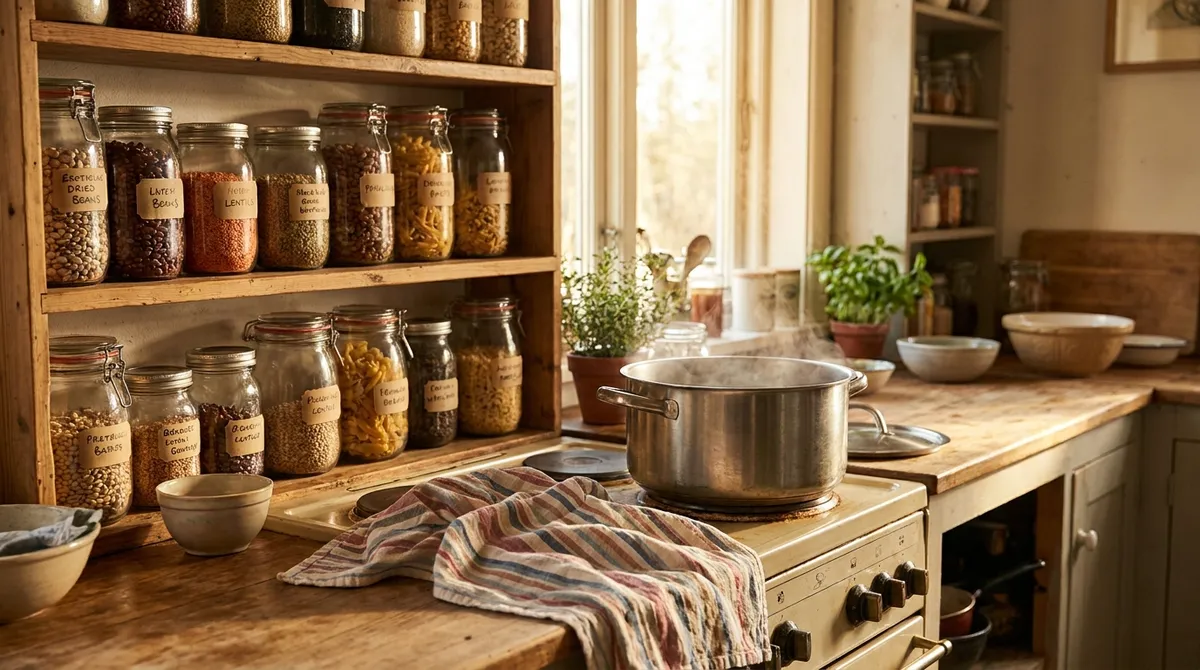
Living well on less isn’t about giving things up—it’s about getting savvier with every dollar. At Centwise Nook, we like to think of grocery savings as a cozy little game: how much comfort, flavor, and nourishment can you tuck into your cart for less?
This guide walks you through real numbers, smart swaps, and time-respecting habits you can actually keep. Pull up a chair, pour something warm, and let’s make your grocery budget feel roomier—without shrinking your joy.
Step One: Know Your “Leak Points” (Where Money Quietly Slips Away)
Before the flashy hacks, it helps to know where your grocery money is sneaking off to. A few common “leak points” can easily add $20–$50 a week to your bill without adding much joy.
1. Single-serve convenience traps
- Example: Buying 10 individual yogurts at $0.89 each = $8.90
Versus a 32 oz tub at $3.99 plus a handful of fruit = about $5.50
Savings: ~$3.40 per week (~$176 per year) for the same (or better) snack.
2. Pre-cut produce
- 16 oz pre-cut pineapple: $5.99
- Whole pineapple: $2.99–$3.99
Savings: about $2–$3 each time, for 2–3 minutes of knife work.
3. Name-brand basics when store brand is identical
- Name-brand canned beans: $1.29
- Store brand: $0.79
Buy 6 cans a week, save $3.00—over a year that’s $156, just on beans.
Quick audit idea (10 minutes):
- Grab your last two grocery receipts.
Highlight:
- Individual snacks - Pre-cut/ready-made items - Name brands of staples (rice, pasta, canned goods, dairy) 3. Circle any item where there’s a store-brand or bulk alternative. 4. Next trip, switch just 3–5 of those items. Don’t overhaul everything at once.
This isn’t about perfection; it’s about quiet, repeatable wins that add up.
Smart Swaps That Keep Comfort, Cut Cost
Swapping ingredients can save money without turning dinner into a sad version of itself. Think of these as cozy side-grades, not downgrades.
1. Protein swaps that still feel filling
- Chicken thighs instead of breasts
- Boneless skinless breasts: ~$4.49/lb
- Bone-in thighs: ~$1.49–$1.99/lb
If your household uses 4 lbs a week, swapping half to thighs can save $5–$6/week (~$260/year).
- Dry beans instead of all canned
- Canned beans: $0.79–$1.29 per can (15 oz)
- 1 lb dry beans (~6 cups cooked) often $1.50–$2.00
Roughly the equivalent of 3–4 cans for the price of 1–2. Batch-cook a pound on Sunday, freeze in 1.5-cup bags.
Time-respecting tip: If cooking from dry beans feels like “one more chore,” pick just one bean night a week—like a big pot of chili or taco filling—and use canned the rest of the time. Saving some is better than saving all.
2. Grain and carb swaps that stretch meals
- Rice + veggies instead of pure protein portions
- 1 lb chicken breast plus a side might feed 3 people.
- 1 lb chicken breast + 2 cups rice + 2 cups frozen veggies can stretch to 5–6 portions.
You’re not just saving per meal—you’re creating leftovers for lunches.
- Oats instead of boxed cereal (most days)
- Name-brand cereal: $4.49 for ~8–10 servings
- Store-brand oats: $2.50–$3.00 for ~20–30 servings
If you replace cereal with oats just 3 days a week, you could easily save $5–$8/month, or about $60–$100/year.
3. Flavor boosters instead of expensive “fancy” items
- Replace: $4.99 specialty sauce you’ll use twice
- With: basic pantry flavor boosters you use weekly:
- Onions, garlic
- Soy sauce or tamari
- Lemon juice or vinegar
- Dried herbs (Italian blend, chili powder, cumin, smoked paprika)
A $1.29 onion, $0.75 lemon, and $2.99 bottle of soy sauce can flavor multiple meals far more economically than niche marinades that expire half-full.
Seasonal Timing: Let the Calendar Lower Your Bill
Shopping with the seasons isn’t just quaint—it’s mathematical. Foods in season are often 20–50% cheaper and taste better.
1. Fruits and veggies that drop in price by season
- Spring: asparagus, spinach, strawberries
- Summer: tomatoes, zucchini, peaches, berries, corn
- Fall: apples, squash, sweet potatoes, cabbage
- Winter: citrus (oranges, grapefruit), carrots, potatoes, onions
Example price shift:
- Fresh berries in winter: $4.99–$5.99 per 6 oz
- Same berries in peak summer: $1.99–$2.50 per 6 oz
Switching to frozen berries in winter (often $2.99 for 12–16 oz) saves money and reduces waste.
2. Plan flexible meals around what’s cheap
Instead of planning “zucchini pasta bake” specifically, plan “one veggie bake” and let the sales guide you:
- If zucchini is $0.79/lb—use zucchini.
- If broccoli is $1.29/lb—use broccoli.
- If frozen veg is on sale—use mixed frozen.
Time-respecting trick: Keep 5–7 “template meals” in your back pocket:
- Stir-fry (pick any veg + any protein + rice)
- Pasta + “whatever veg & beans we have”
- Sheet-pan dinner (one protein + two veg)
- Soup or chili (beans + veg + grain or bread on side)
Then shop what’s cheap and plug it into the template. You save both time and money.
Realistic Meal Planning That Doesn’t Take Your Whole Sunday
Meal planning doesn’t have to mean color-coded spreadsheets. Think of it as deciding just enough to avoid panic-buys, takeout, and waste.
1. The “3-2-2” weekly plan
Instead of planning 21 meals, try:
- 3 easy dinners you know by heart
- 2 “repeat” dinners (doubles or leftovers)
- 2 flexible meals for “use it up” (soup, stir-fry, tacos, frittata)
Example week:
- Mon: One-pot pasta with frozen spinach and tomatoes
- Tue: Sheet pan chicken thighs, carrots, potatoes
- Wed: Leftover pasta + salad
- Thu: Bean and veggie tacos (use leftover veg)
- Fri: Homemade pizza on store-bought dough (top with fridge odds & ends)
- Sat: Leftover tacos as quesadillas
- Sun: Free / simple (eggs & toast, sandwiches, or breakfast for dinner)
This structure avoids the “we have food, but not for an actual meal” problem that leads to $40 takeout.
2. Cook once, eat twice (without feeling like you’re stuck on repeat)
- Double a batch of:
- Chili
- Lentil soup
- Baked oatmeal
- Roasted veggies
Freeze half in single portions or eat it once this week and once next week. That’s one fewer meal to plan and shop for.
Example savings:
If one takeout night for two costs $30–$40, replacing even two of those nights a month with freezer-leftovers saves $60–$80/month, or $720–$960/year—just by being kind to your future self.
Store Hacks: How to Shop Like a Quiet Pro
This is where cozy strategy meets real numbers.
1. Mind the unit price, not the sticker price
Most stores list “unit price” on the shelf tag (e.g., $0.12/oz). Bigger isn’t always cheaper.
Example:
- 16 oz cheese: $4.49 ($0.28/oz)
- 8 oz cheese: $2.19 ($0.27/oz)
The smaller one is actually cheaper per ounce. That might be a small difference, but if you apply this thinking to 10–15 items each trip, the savings stack up.
2. Rotate 1–2 discount stores into your month
You don’t have to love bargain stores or go weekly. But even going once or twice a month to Aldi, Lidl, or your local discount chain for staples can significantly trim costs.
Typical savings (ballpark, varies by region):
- Milk: often $0.50–$1.00 cheaper per gallon
- Eggs: often $0.50–$1.50 cheaper per dozen
- Canned goods and pasta: $0.20–$0.40 less per item
If you buy:
- 2 gallons of milk
- 2 dozen eggs
- 10 canned items
- 4 boxes of pasta
You could save $8–$15 in a single stock-up trip.
3. Loyalty apps and digital coupons (without turning it into a hobby)
Pick one primary grocery store. Download their app, and do this:
Before you shop, spend 5 minutes:
- Clip only coupons for items you already buy often - Check the weekly ad for meat, dairy, and produce sales 2. Ignore everything else that feels like “buy because it’s on sale.”
Even a lazy approach can easily save $5–$15 per trip, especially on staples like coffee, cheese, and frozen foods.
Waste Less, Save More: Make Your Fridge Work For You
Food you throw out is money you already spent. Minimizing waste is one of the gentlest ways to save more without feeling deprived.
1. The “Eat Me First” bin
Dedicate one small bin or shelf in your fridge labeled “Eat Me First.” Move into it:
- Leftovers
- Half-used veggies
- Open deli meat or cheese
- Yogurt close to its date
Then plan:
- One weekly “leftover lunch” day
- One weekly “fridge frittata / stir-fry / soup” night
If you typically throw away $5–$10 worth of food a week (very common), that’s $260–$520/year hiding in your trash can.
2. Freeze more than you think you can
Good candidates:
- Overripe bananas (for smoothies or banana bread)
- Bread (slice and freeze; toast from frozen)
- Cooked rice and grains
- Shredded cheese bought on sale
- Leftover tomato paste (freeze in tablespoon dollops)
If you save even 1 loaf of bread ($3–$4), 1 lb of meat ($3–$6), and a few odds and ends each month, that’s easily $10–$20/month preserved instead of tossed.
Gentle Splurges: Saving Money So You Can Spend It Where It Matters
Living well on less doesn’t mean never buying the “good” cheese or fancy chocolate. It means choosing your splurges with intention.
1. Decide your 1–3 non-negotiables
Examples:
- High-quality coffee
- Nice butter
- Fresh herbs
- One fancy snack per week
Then go cheaper or simpler elsewhere:
- Store-brand beans so you can have better coffee
- Frozen veggies so you can afford fresh berries in season
- Basic cheese so you can enjoy one small block of your favorite artisan cheese
This reframes saving as supporting your joys instead of stealing them.
2. Celebrate savings like income
If you:
- Swap to store brands and save $8
- Skip one takeout meal for freezer leftovers and save $35
- Use seasonal produce and save $10
That’s over $50 that stays with you that week.
Consider:
- Transferring $20 of that to savings or debt
- Putting $5–$10 toward a “treat fund” (a book, plant, special ingredient, or family outing)
- Keeping the rest as breathing room in your budget
When you feel where the saved money goes, it’s easier to stick with the habits.
Conclusion
Your grocery budget doesn’t have to feel like a battlefield between enjoyment and responsibility. With a few quiet shifts—checking unit prices, leaning into seasonal sales, using “template meals,” and embracing simple swaps—you can eat well, waste less, and keep more money for what truly matters to you.
Think of each small saving as one more thread in a cozy, resourceful life: you’re not cutting back, you’re crafting something thoughtful and sustainable. Start with just one or two changes from this list, see how they feel, and let your pantry—and your bank account—grow richer from there.
Sources
- USDA Economic Research Service: Food Prices and Spending - Provides data on U.S. food spending patterns and trends, helpful for understanding where grocery dollars typically go.
- U.S. Bureau of Labor Statistics: Consumer Expenditures – Food - Offers detailed statistics on how households spend on food at home versus away from home.
- USDA Seasonal Produce Guide - Lists common fruits and vegetables by season, supporting the section on timing purchases with the calendar.
- Harvard T.H. Chan School of Public Health – Healthy Eating Plate & Budget Tips - Explains how to build balanced, nutritious meals, which aligns with stretching ingredients like beans, grains, and vegetables.
- Penn State Extension: Reducing Food Waste at Home - Offers practical suggestions for storing and using food efficiently, reinforcing tips on leftovers, freezing, and waste reduction.