Stretching a grocery budget doesn’t have to feel like punishment or endless coupon clipping. With a few cozy, realistic habits, you can keep your cart (and pantry) full while your total at checkout goes down. Think of this as the Centwise Nook way: resourceful, gentle on your time, and centered on living well on less—never on going without.
Below, you’ll find practical swaps, price comparisons, and timing tricks you can start using on your very next shop.
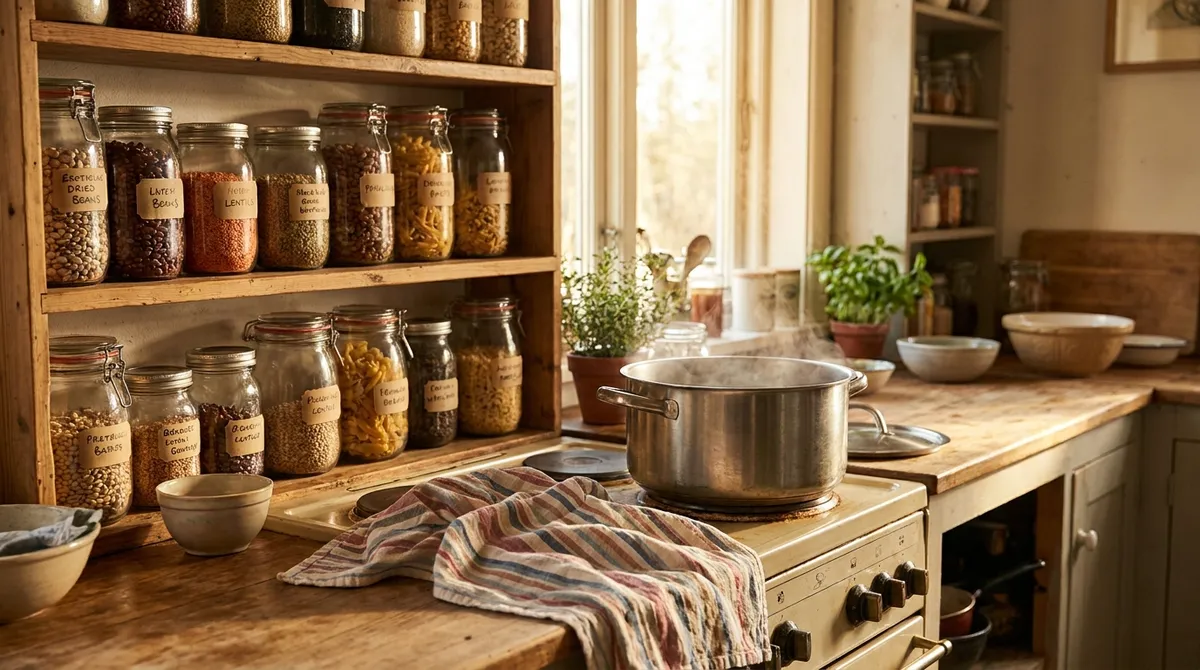
Build a “Comfort Core” Pantry That Automatically Saves Money
A thoughtfully stocked pantry is like a savings account you can eat from. When you always have budget-friendly basics on hand, you’re far less likely to grab expensive convenience foods or hit takeout when you’re tired.
Focus on a “comfort core” of ingredients that are cheap, versatile, and filling:
- Dry beans vs. canned beans
- Canned black beans: about $1.00–$1.50 per 15 oz can
- Dry black beans: about $1.50–$2.00 per pound, which cooks up to ~6 cups (equivalent to about 4 cans).
- Savings: roughly $2–$4 per pound of beans if you prep them yourself in batches.
- Rice and oats as your base carbs
- Flavored instant rice packets: $2–$3 for 2–3 servings
- Plain white or brown rice: about $2 for 2 lb, which gives ~20 servings.
- Savings: about $0.50–$1.00 per serving by seasoning your own rice.
- Large tub of oats: about $4–$5 for 42 oz, often less than $0.20 per serving.
- Versatile canned tomatoes
Use them for soups, pasta, chili, curries, and stews instead of premade sauces. One $1–$1.50 can replaces a $3–$5 jar of specialty sauce.
A comfort-core pantry could look like this:
- Rice, oats, and pasta
- Dry beans or lentils
- Canned tomatoes and tomato paste
- Frozen vegetables (peas, spinach, mixed veg)
- Basic seasonings: salt, pepper, garlic powder, onion powder, Italian blend, chili powder, bouillon
This small foundation lets you turn almost any sale item—cheaper chicken thighs, discounted tofu, or marked-down veggies—into a complete, cozy meal without extra spending on “helper” kits or expensive sauces.
Smart Swaps: Small Changes, Big Grocery Wins
You don’t need to overhaul your entire diet to save. Target just a few high-impact swaps, and you can shave $20–$40 a week without feeling like you’re “on a budget.”
Here are some realistic trade-offs with approximate savings:
Swap single-serve yogurt for large tubs
- 4 individual yogurts: $0.90–$1.30 each = up to $5.20 - 32 oz tub of plain yogurt: $3–$4 (equivalent to 4 servings or more). - Savings: around $1–$2 per week, or $52–$100 per year. Add your own fruit and a drizzle of honey for a nicer (and often healthier) version.
Choose block cheese over pre-shredded
- 8 oz pre-shredded: $3.50–$5 - 8 oz block: $2.50–$3.50 - Savings: about $1–$1.50 per pack, and freshly grated melts better. A simple hand grater or mini food processor keeps this hack very low-effort.
Buy whole carrots instead of baby carrots
- 1 lb baby carrots: about $1.50–$2.00 - 1 lb whole carrots: $0.80–$1.20 - Savings: $0.30–$0.80 per pound, plus whole carrots last longer in the fridge and can be used for soups and roasts.
Trade one bottled drink per day for at-home versions
- Bottled iced tea or soda: $1.50–$2.50 - Home-brewed tea or homemade flavored water: often $0.10–$0.25 per serving. - Savings: even $1.25/day is about $37/month, or $450+ per year.
Go from brand-name to store brand on “invisible” items
For flour, sugar, salt, canned beans, and frozen vegetables, store brands often cost 10–30% less with no noticeable difference. Swapping just 10 items in your regular cart could trim $5–$10 per trip.
Instead of trying to save on everything, pick 3–5 items you buy weekly and experiment with cheaper versions. If you don’t like one, switch it back—but keep the savings where you don’t notice a taste difference.
Time-Smart Strategies: Save Money Without Making Grocery a Second Job
Your time is valuable. If a strategy saves $2 but costs an extra hour of effort, it’s often not worth it. Here are realistic, time-respecting ways to save:
1. The 10-Minute Weekly Planning Habit
Set a timer for 10 minutes, once a week, and:
- Check your fridge and pantry for what needs using first.
- Glance at one store’s digital flyer or app (no need to chase every sale).
- Pick 3–4 flexible meals built around what’s on hand + what’s on sale.
- Make a short list and stick close to it.
This tiny habit can easily cut $15–$30 per week by reducing impulse buys and food waste, with minimal mental load.
2. “Batch Once, Enjoy Often” Cooking
Instead of full meal-prepping, focus on batch-cooking components:
- Make a big pot of rice, beans, or lentils on Sunday.
- Roast a sheet pan of vegetables.
- Cook a pack of chicken thighs or a block of tofu.
From those building blocks, you can assemble:
- Rice + beans + salsa + cheese = burrito bowls
- Roasted veg + grains + egg = warm grain bowls
- Chicken + frozen veg + canned tomatoes = quick skillet meal or pasta topping
Spending 60–90 minutes once a week could replace 2–3 takeout orders, easily saving $30–$60 weekly, or $1,500–$3,000 annually, depending on your takeout habits.
3. Use the “One-Store Rule”
Driving to three different stores to chase every sale can burn gas, time, and patience. Try:
- Choose one primary store whose prices and products you like.
- Keep a short mental “price book” for 5–10 staples (milk, eggs, bread, rice, chicken, coffee).
- If a nearby store consistently beats your regular on those items only, it might be worth an occasional stop—otherwise, let it go.
Your stress goes down, and your net savings may actually increase when you’re not tempted into “just one more quick stop” that ends in extra spending.
Seasonal & “Timing” Tricks That Quietly Cut Your Bill
When you buy often matters as much as what you buy. A few well-timed habits can keep your kitchen cozy while your spending stays low.
Shop Produce in Season
In-season produce is fresher, tastes better, and is often 30–50% cheaper than out-of-season imports.
- Spring: asparagus, radishes, spinach, strawberries
- Summer: tomatoes, zucchini, peaches, berries, corn
- Fall: apples, squash, sweet potatoes, cabbage
- Winter: citrus (oranges, grapefruit), hardy greens, carrots, onions
Example:
- Fresh blueberries in January can be $3–$5 per 6 oz.
- In peak summer, they might be $1.50–$2.50 for the same amount.
- Or switch to frozen berries, which are often $2–$4 for 12–16 oz year-round and picked at peak ripeness.
Make a short list of 5–7 fruits and veggies you actually enjoy and learn when they’re cheapest. Then lean heavily on those in their season.
Learn Your Store’s Mark-Down Rhythm
Many grocery stores discount items that are close to their “sell by” date:
- Meat, bakery items, and prepared foods often get 30–50% off stickers.
- These markdowns often appear at specific times, such as early morning or late evening, or a certain weekday.
Ask (if you’re comfortable):
“Hi! Do you have particular times when you usually mark down meat or bakery items?”
Then plan to swing by near those times when convenient—not as a special trip, just when it fits your schedule. Buy only what you can freeze or use this week to avoid waste.
Use the Freezer Like a Second Pantry
The freezer is your secret weapon against both waste and “I’m tired, let’s order in” nights:
- Freeze half a loaf of bread, extra tortillas, or buns to prevent them going stale.
- Portion meat into smaller packs so you only thaw what you’ll use.
- Save “almost-wasted” produce—toss wilted greens, extra herbs, and overripe bananas into labeled bags for smoothies, soups, and bakes.
Every time you rescue $3–$5 of food from the trash by freezing it, you’re quietly putting money back in your pocket with almost no extra effort.
Cozy, Low-Cost Meal Ideas With Realistic Price Ranges
Here are a few flexible, budget-friendly meals that feel comforting, not “cheap.” Prices will vary by region, but these ballparks show how low a filling dinner can go.
1. One-Pot Lentil & Tomato Stew
- Lentils (1 cup dry): $0.60–$0.80
- Canned tomatoes (1 can): $1.00–$1.50
- Onion, carrot, and garlic: $1.00–$1.50 total
- Spices and a drizzle of oil: $0.50
Total: about $3.10–$4.30 for 4 hearty servings
Per serving: $0.80–$1.10
Serve with toast or rice for extra comfort. This is easy to double and freeze.
2. Sheet-Pan Chicken Thighs With Veggies
- Chicken thighs (2 lb family pack): $4–$6 on sale
- Potatoes and carrots: $2–$3
- Onion, oil, and seasoning: $1–$1.50
Total: around $7–$10.50 for 4–5 servings
Per serving: roughly $1.40–$2.60
This is a “hands-off” recipe—chop, season, bake. The oven does the work while you unwind.
3. Pantry Pasta Night
- Pasta (1 lb): $1–$1.50
- Canned tomatoes or jarred sauce: $1–$3
- Frozen spinach or mixed veg: $1–$2
- Grated cheese (optional sprinkle): $0.75–$1
Total: roughly $3.75–$7.50 for 4 servings
Per serving: $0.95–$1.90
A few dried herbs, garlic powder, or chili flakes make this feel special with almost no extra cost.
Gentle Mindset Shifts That Make Saving Feel Good, Not Grim
Sustainable grocery savings are more about mindset than rigid rules. A few small shifts make the whole process feel calmer and more rewarding:
- Celebrate resourcefulness, not restriction.
Reimagining leftovers into tomorrow’s lunch or turning near-wilted veggies into soup is a win, not a fallback.
- Track wins in dollars, not perfection.
Did you swap soda for home-brewed iced tea three times this week? That might be $4–$6 saved, and that absolutely counts.
- Give yourself “fun money” within the grocery budget.
Set aside $5–$10 per week for something that brings you joy: a nice cheese, chocolate, special coffee, or bakery treat. When most of your cart is smart, little luxuries fit comfortably.
- Use up what you have—without guilt.
If your week gets busy and you lean on boxed mac and cheese plus frozen veggies, that’s still cheaper (and often faster) than takeout. The point is flexibility, not a perfect meal plan.
Over time, these cozy, low-pressure habits can trim hundreds to thousands off your yearly grocery spending while keeping your table full and your routines humane.
Conclusion
Grocery savings don’t have to come from extreme couponing or joyless meals. With a calm 10-minute plan each week, a comfort-core pantry, a few smart swaps, and some seasonal timing tricks, you can eat well, waste less, and keep more money in your pocket.
The heart of the Centwise Nook approach is simple: celebrate the creativity in making something warm, filling, and delicious out of humble ingredients. Small, kind-to-yourself changes stack up—and before long, your cart, your kitchen, and your bank account all start to feel a little more abundant.
Sources
- U.S. Bureau of Labor Statistics – Average Retail Food and Energy Prices – Provides current average prices for common grocery items across the U.S.
- U.S. Department of Agriculture (USDA) – Retail Trends – Background on how grocery retail pricing and trends work.
- USDA – Seasonal Produce Guide – Helps you identify which fruits and vegetables are in season and typically more affordable.
- Harvard T.H. Chan School of Public Health – Beans and Legumes – Explains the nutritional and cost benefits of beans and legumes as pantry staples.
- Cleveland Clinic – Are Frozen Fruits and Vegetables Healthy? – Discusses the nutritional value of frozen produce, which is often a budget-friendly alternative to fresh.